


Water analysis
Changes in water are often noticed only when it's too late
A body of water tips long before you can see it
A summer evening, the water looks a bit murkier than usual, smells slightly rotten – hardly a cause for concern. The next morning, the first fish float belly up. Often, there are no more than two days between the unremarkable evening and the dead fish – regardless of whether it’s a garden pond, a public swimming lake, or a reservoir.
What lies behind this is a well-known mechanism: In heat, with high nutrient input and little water movement, cyanobacteria – blue-green algae – spread explosively. The algae deplete the water of oxygen, and when they die, the bacteria that decompose them consume additional oxygen from the deeper layers. The result is oxygen deficiency, which literally suffocates fish.
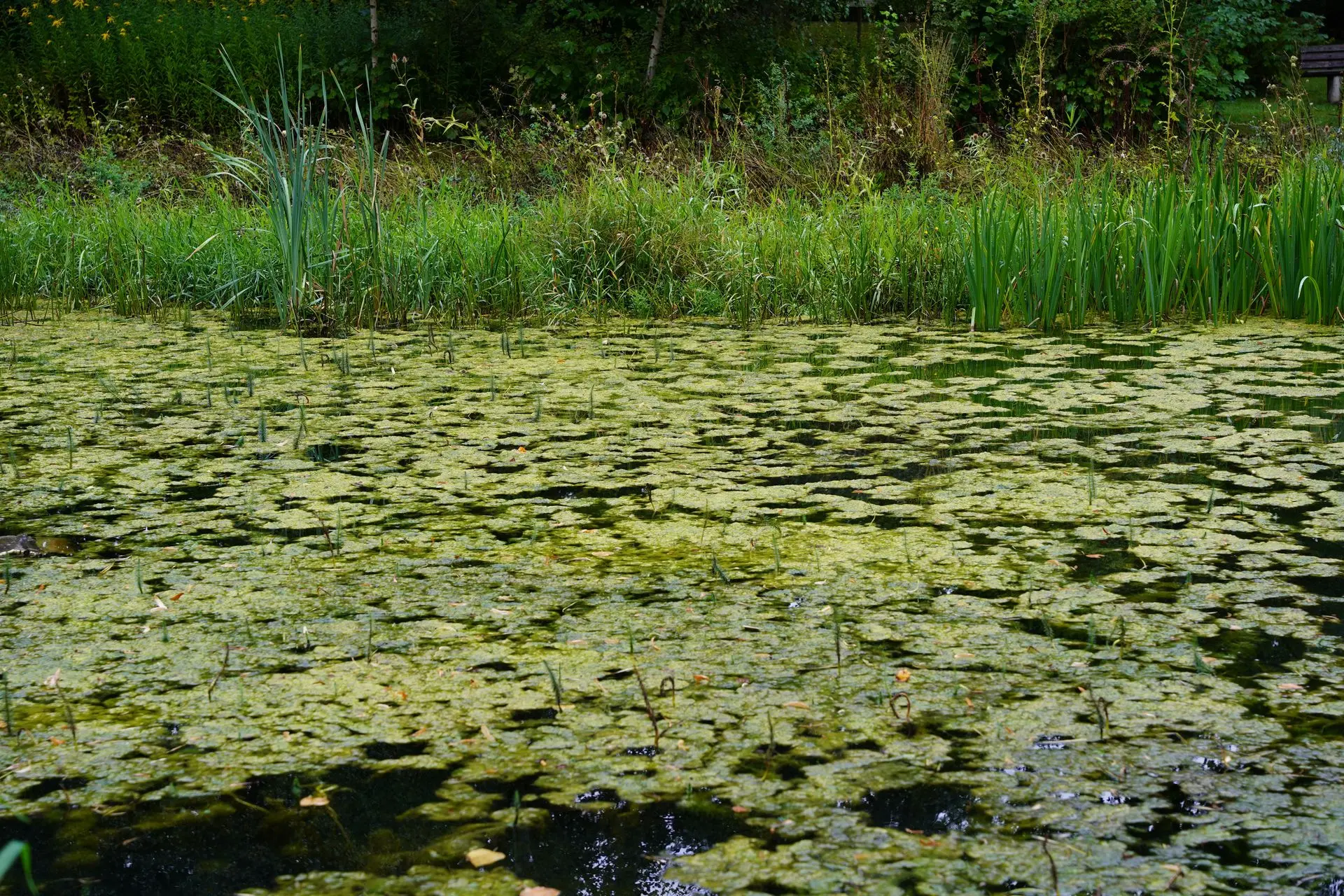
The climate change exacerbates exactly these conditions: more heatwaves, declining water levels that concentrate nutrients more, and warmer water in which cyanobacteria thrive particularly well. Affected are small garden ponds as well as swimming lakes where hundreds of people swim in the summer, or reservoirs that supply entire regions with water. Visible warning signs almost always come too late:
- Cloudiness that changes within a few days
- Water plants that suddenly disappear
- Green algae mats on the surface
- Foul smell at the shore
- Dead fish – usually the last, not the first sign
Don't wait until you can smell the problem
The actual warning signals are measurable long before they become visible: pH value, dissolved oxygen, redox potential, chlorophyll-a as a measure of algal quantity, total phosphorus as a nutrient driver, temperature, dissolved organic carbon (DOC), and electrical conductivity. Together, these eight values create an objective picture of the condition of a body of water – regardless of whether it currently "looks good."
The idea behind it is simple: Whether you are a garden pond owner, a fishing club, a municipal utility, or a community – no one needs to operate their own laboratory for this. All it takes is a simple way to regularly send in a sample, and someone to interpret the numbers and say what specifically needs to be done before the first fish appear.
The Water Analysis Package from the iot-shop
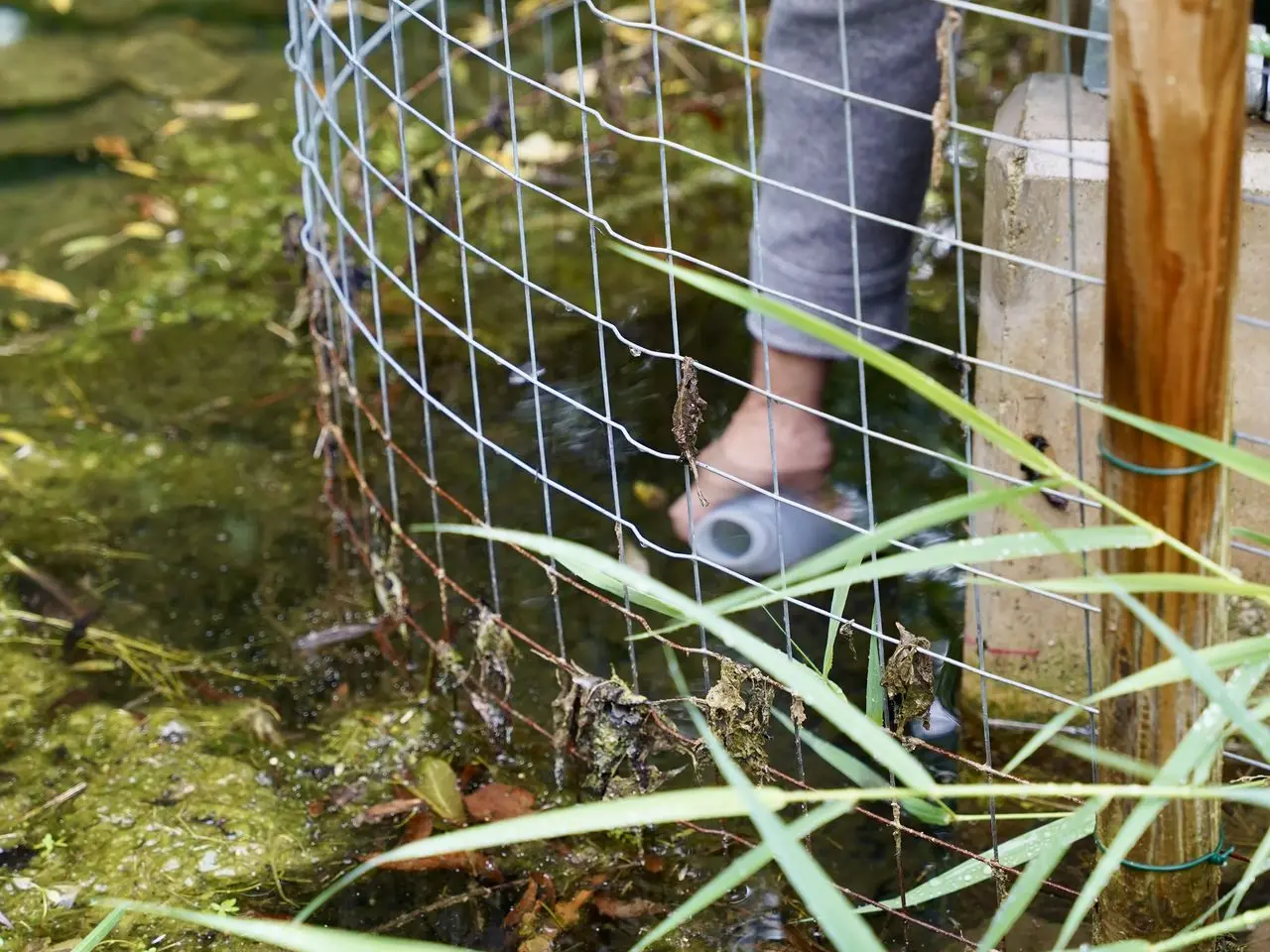
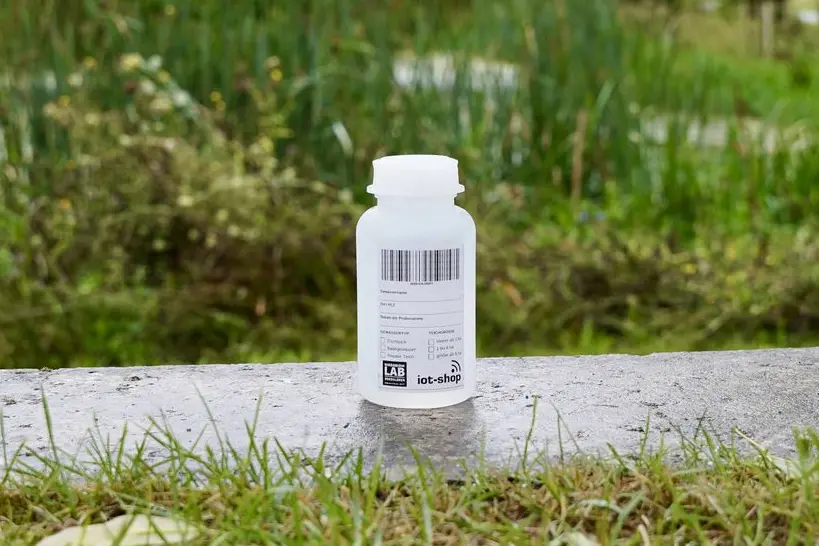
We organize the transport of your sample to our laboratory partner Mikrobiom-Lab and back. It will be analyzed there according to LAWA standards and the EU Water Framework Directive. You order the package in the shop and receive a sample bottle with a serial number as well as a return shipping label directly to the lab. It is best to ship on Mondays or Tuesdays so that the sample arrives fresh. Two days after receipt, you will receive the report from us.