

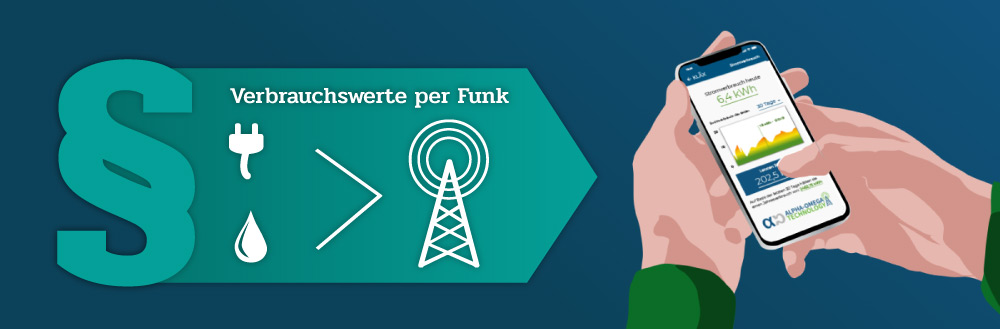
To comply with the EU Energy Efficiency Directive, the housing industry must switch to radio-based metering. With a LoRaWAN-controlled IoT, it can manage buildings in an energy- and cost-efficient way.
Berlin, 12 September 2019: Under the revised EU Energy Efficiency Directive (EED), member states are to promote more efficient use of energy. Radio-based metering thus becomes mandatory for the housing industry. By using a licence-free Long Range Wide Area Network, LoRaWAN for short, housing companies and property managers can meet the legal requirements comparatively easily and cost-effectively, because LoRaWAN transmits measurement and sensor data over long distances with little energy and offers excellent building penetration. With a sensor-based Internet of Things (IoT), energy-efficient facility management can be realised, especially in larger buildings. LoRaWAN sensors are simple in design and therefore inexpensive and flexible to use, with long battery lives of up to five years. And there is also an energy-efficient technical solution for smart metering via LoRaWAN: the "KLAX" reader continuously captures and transmits the values of the optical interfaces of modern metering systems (mME) for transparent consumption recording. The long range also makes LoRaWAN interesting for smart city applications in municipalities, such as intelligent sensor-based street lighting.
The EED requires a revision of the German Heating Costs Ordinance with regard to remotely readable heat cost allocators and sub-annual consumption information for better climate protection: from October 2020, tenants and residents must be informed of their consumption twice a year, and from 2022 even monthly. From next year, therefore, only remotely readable meters and allocators are to be installed, provided the costs and technical effort are in reasonable proportion to the energy saved. The aim is to make optimum use of savings potential, for example by residents adjusting their consumption behaviour on the basis of the data obtained. Modernisation measures alone, such as simply insulating buildings, do not deliver the required effects. Instead, housing companies must use the possibilities of digitalisation, such as those offered by smart facility management with their own IoT and smart metering. For housing companies and property owners, switching to radio technology with remote reading is the only way to obtain the required sub-annual consumption information.
A LoRaWAN-based IoT saves more than energy
The possible applications of LoRaWAN go far beyond energy saving and include smart offices, smart buildings and even smart cities. A LoRaWAN-based building IoT is particularly worthwhile for larger residential buildings, but also for complexes such as office buildings or shopping centres. When a residential or commercial building is digitalised, it makes sense to use the existing LoRaWAN network for further functions. The intelligent use of sensors not only saves energy but also optimises the deployment of staff.
Sensors monitor the indoor climate
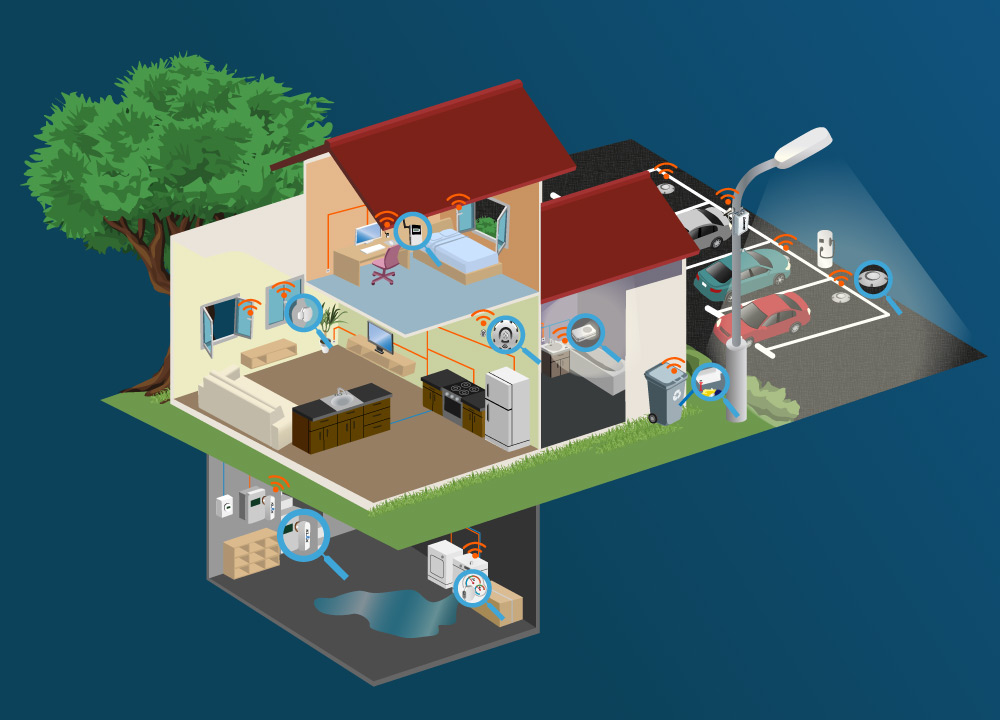
For example, unnecessary tasks for staff such as temperature checks in the server room can be eliminated. Temperature and humidity sensors take over the control of the indoor climateby recording temperature and humidity readings indoors. The data is transmitted via LoRaWAN, is available in the chosen back end and can be processed further. These sensors are particularly helpful for rooms in basements or rooms with sensitive technical equipment such as servers. Mould growth can also be detected early in this way.
Sensors in doors and windows avoid costly inspection rounds
Door and window sensors transmit opening and closing events. Time-consuming and therefore expensive inspection rounds by staff in large buildings become unnecessary. The sensor works with a magnet and detects whether the magnet is within range of the sensor or not. By attaching the supplied magnet to the door or window and the sensor to the corresponding frame, the facility manager can register openings and closings.
Optimal use of parking spaces
Outside digitalised residential and office buildings, too, sensors are used, for example in car parks and parking garages. Here they record parking duration and occupancy, among other things, or identify vehicles parked illegally at EV charging stations or in fire service access routes. The advantages: the time spent searching for a parking space falls, and with it the emission of CO2; EV charging stations are more readily available, capacities are used optimally and inspectors are deployed in a targeted manner.
LoRaWAN sensors: high penetration and range without licences
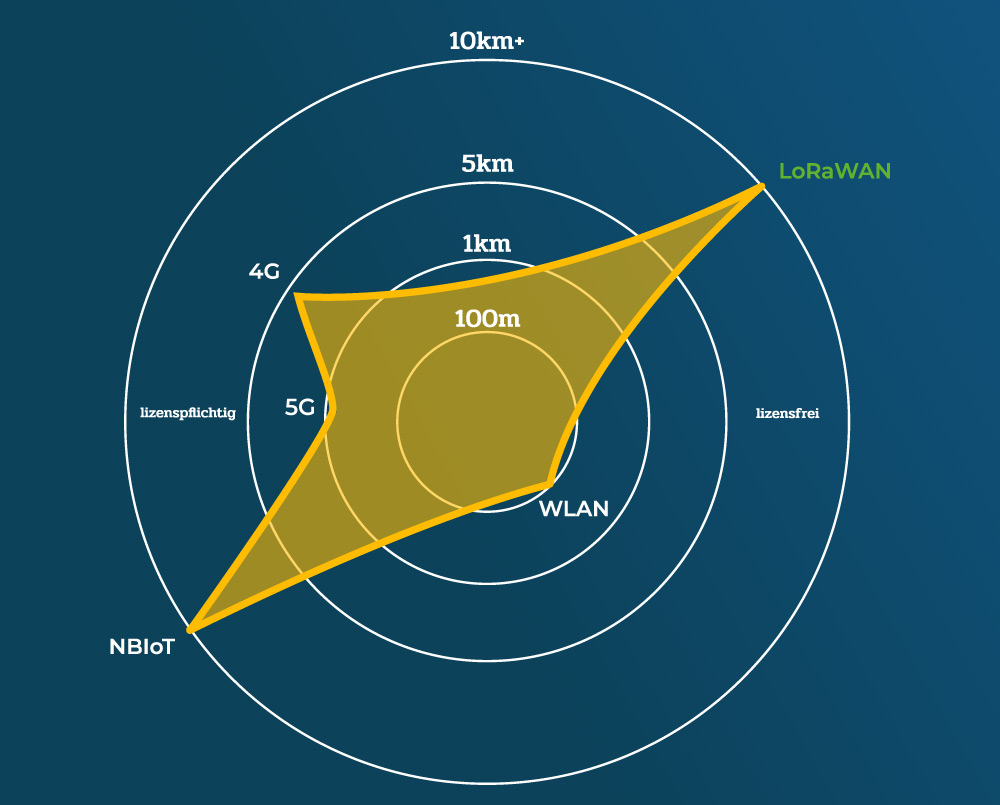
A decisive advantage of LoRaWAN sensors, besides their long range, is their good building penetration. While Wi-Fi, for example, often fails at a closed door between two rooms, LoRaWAN passes through walls and several floors. In addition, LoRaWAN , unlike other networks such as NB-IoT or Sigfox, can be installed and operated by the users themselves and adapted individually to their requirements: the network can be set up independently and extended at any time without high costs. If the signal becomes weak at one point, for example because the distance is too great, an additional low-cost gateway provides a remedy. And a LoRaWAN-based IoT saves money, because unlike other technologies the network is licence-free, which means there are no costs for an external service provider. The sensors' batteries are economical too, lasting up to five years.
Smart metering systems: an optical reader for greater energy efficiency
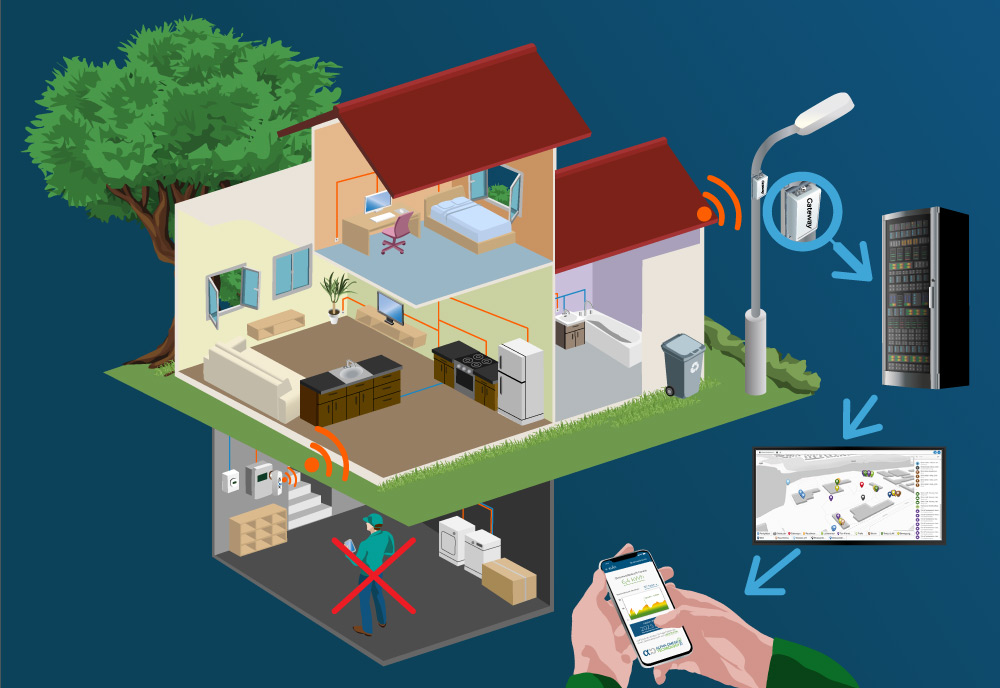
Modern electricity meters use optical interfaces to output the meter readings. Until now, however, there was no technical solution for capturing this data and evaluating it continuously. The IT companies Alpha-Omega Technology and ZENNER IoT Solutions have closed this gap with the product innovation KLAX . KLAX is an attachment for the integrated optical interface that is simply fixed with a magnet. The signals from the interface are picked up by the optical head and transmitted via LoRaWAN. The measured values are available in the back end shortly after measurement, unlike the readings provided by grid operators only once a day. This allows customers to monitor their energy consumption continuously every 15 minutes and influence their current electricity consumption directly. The product enables energy and water utilities as well as housing companies to offer value-added services based on the available readings.
Data protection in LoRaWAN
The use of IoT in buildings used by people poses major data protection challenges. A smart building system based on a LoRaWAN network offers ideal conditions here: LoRaWAN is a secure protocol with several layers of encryption, and no personal data is collected.
In keeping with the data minimisation principle of the EU GDPR, the sensors transmit only the information that is strictly necessary for the respective function.
The hardware required to build your own LoRaWAN IoT is available from specialised online shops such as iot-shop.de . Expert advice on the topic is available from Alpha-Omega Technology GmbH.
Download the infographic